Simple Sabotage Field Manual
By the Office of Strategic Services
October 1, 2026 (originally published in 1944)
ISBN-13: 9798996423408
44 pages
During World War II, the United States government published one of the strangest instructional booklets ever distributed: Simple Sabotage Field Manual.Created in 1944 by the Office of Strategic Services (OSS), the wartime intelligence agency that later evolved into the CIA, the manual was designed for ordinary citizens living in enemy-occupied territory. Its goal was simple: encourage everyday acts of disruption that, when repeated thousands of times, could quietly grind enemy operations to a halt.
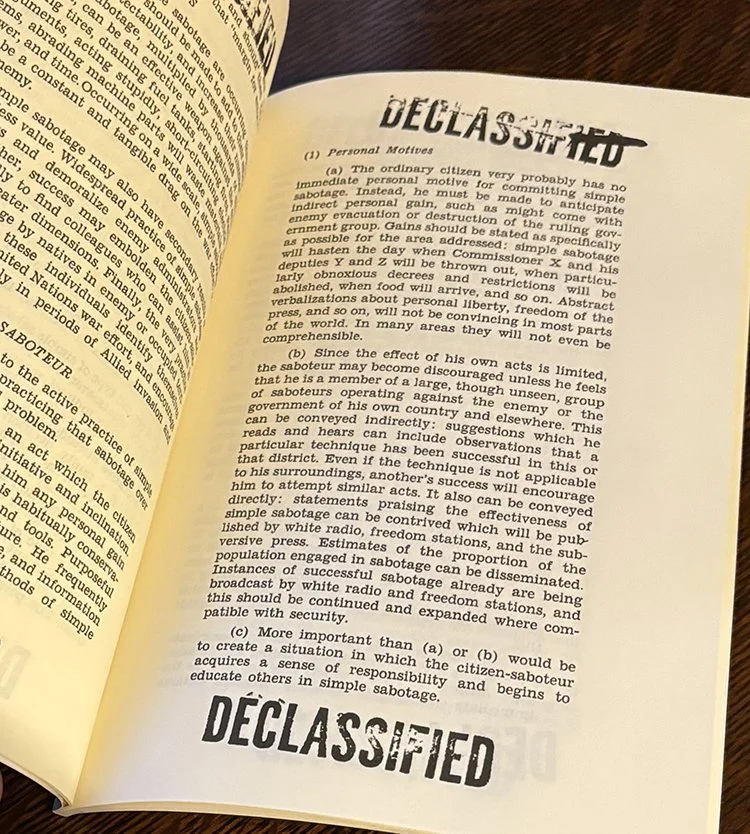
The OSS understood that sabotage did not always require explosives or trained operatives slipping through the shadows. Sometimes it only required delay, confusion, carelessness, or inconvenience. A worker could misfile paperwork. A mechanic could "accidentally" make the wrong repair. Meetings could run too long. Tires could mysteriously lose air. "Acts of simple sabotage, multiplied by thousands of citizen-saboteurs, can be an effective weapon against the enemy," the manual explains in its opening pages.
OSS director William "Wild Bill" Donovan arranged for portions of the manual to be spread through flyers, radio broadcasts, and personal contact inside enemy-controlled nations. Citizens were encouraged to disrupt factories, transportation systems, offices, warehouses, and military operations through methods that ranged from subtle annoyance to outright destruction.
Some of the suggestions sound amusing, but would indeed be effective, like releasing dozens of moths in a theater showing propaganda films. Others are more serious, including instructions for damaging equipment, starting fires, and interfering with industrial production. Together, they reveal how intelligence agencies viewed resistance during wartime: not only as dramatic acts of espionage, but also as a thousand tiny pebbles tossed into the gears of a war machine.
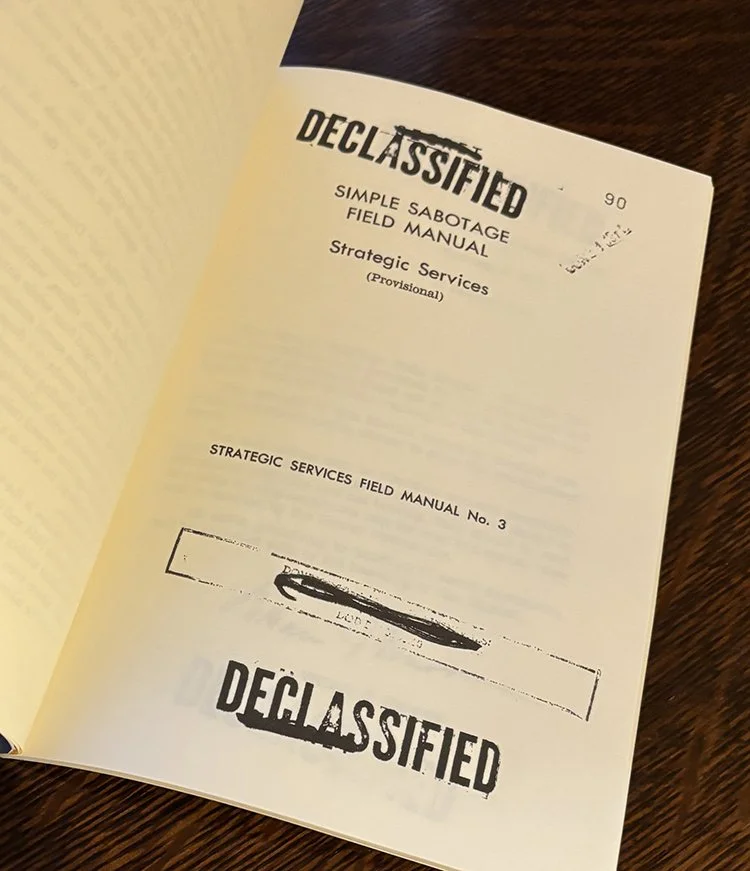
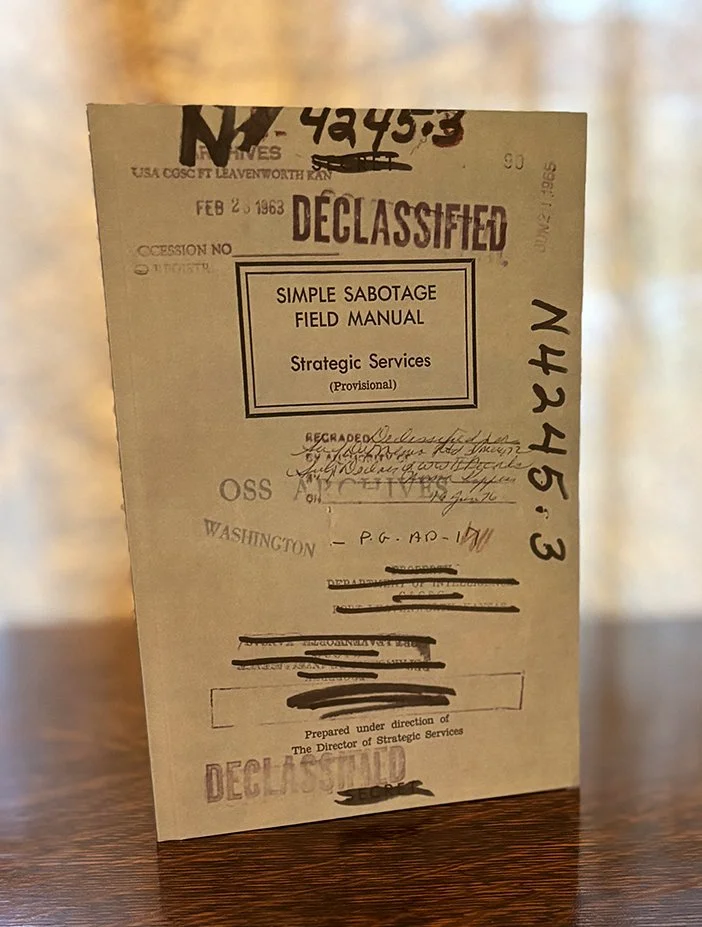
This edition is a complete reproduction of the Simple Sabotage Field Manual as originally published in 1944 with its "Declassified" stamps added later. It stands as both a historical artifact and a fascinating glimpse into the psychology of disruption, where even a badly run meeting could become an act of warfare. It should be taken as nothing more.